
The five best influencer marketing campaigns of 2026 so far are Cloetta’s Ahlgrens bilar US launch by Pulse Advertising, La Roche-Posay’s No Regrets by Cure Media, Radisson Hotel Group’s Creator Hub by Apple Tree, the IOC’s Olympic Rings Pasta by LePub, and Dr Pepper’s fan-jingle commercial by Deutsch. Each was selected on one test, market entry, participation, scale, creator ownership or listening, and each has a documented creator mechanic and published results from a named source. The context: creator marketing in 2026 is being judged on what audiences did, not what they saw. The State of German Influencer Marketing Report 2026, from MAI xpose360, the Bundesverband Influencer Marketing and HypeAuditor, found micro creators now make up 30 percent of the average German campaign mix and mega creators just 9 percent, as reported by the Bundesverband Marketing Clubs. This list is not a ranking; it opens with the campaign still in market and closes with those already judged at this year’s awards.
5 Best influencer marketing campaigns of 2026
| # | Campaign | Brand / Agency | Creator mechanic | Headline result | Markets | Best for |
|---|---|---|---|---|---|---|
| 1 | Ahlgrens bilar US launch | Cloetta / Pulse Advertising | US influencers plus local creators around a Times Square reveal | Target exclusive, 2,000+ stores from launch day; results not yet published | US (Swedish brand) | European brands entering the US |
| 2 | No Regrets | La Roche-Posay (L’Oréal) / Cure Media | 20+ creators, audience posts tattoo regrets in TikTok comments | 39% of annual Nordic engagement in 6 weeks; +21% sales on hero product | Nordics | Participation-led product campaigns |
| 3 | Creator Hub | Radisson Hotel Group / Apple Tree | Nano creators (1k to 30k) paid in stays, matched to hotels | 400+ hotels, 64 countries; 22.2x conversion vs macro (brand-reported) | Global | Multi-site brands building an always-on channel |
| 4 | Olympic Rings Pasta | IOC, Milano Cortina 2026 / LePub | Athletes post unbriefed from the Olympic Village | 380M social engagements; Silver Lion | Italy, global | Product-as-brief, earned creator content |
| 5 | The Dr Pepper jingle | Keurig Dr Pepper / Deutsch | Fan creator’s TikTok licensed into a national TV spot | 40M+ views; aired in the CFP National Championship; Silver Lion | US | Brands that want to answer creators, not brief them |
1. Ahlgrens bilar US launch (Cloetta)
A market entry built on one surprise
- Brand: Ahlgrens bilar, Cloetta Group
- Agency: Pulse Advertising, an independent global influencer marketing and social media agency with 10 offices worldwide, including New York
- Campaign: Pulse Advertising case page; Cloetta launch announcement
- Test: Market entry
- Platforms: TikTok and Instagram (@ahlgrensbilar_us), out-of-home, in-store sampling
- Creator mechanic: High-profile US influencers with local creators in priority areas, built around a Times Square “car launch” reveal
- Markets: US, launched 17 September 2026
- Headline result: Target exclusive across 2,000+ stores and Target.com from day one; no reach or sales figures published yet
- Best for: European consumer brands planning a US entry in 2027
The Ahlgrens bilar US launch is a 2026 market-entry campaign in which Cloetta Group and Pulse Advertising introduced Sweden’s best-selling foam candy to American shoppers through a Times Square reveal staged as a car launch, a US creator programme and a Target exclusive from day one. It is the newest entry, three weeks old at the time of writing, and the only one without published results. It leads because it is the one still running; the other four have already been judged at this year’s awards. Cloetta announced the US debut of Ahlgrens bilar on 17 September 2026, exclusively at Target, in four variants, according to the company’s PR Newswire release. The candy is car-shaped, has been made in Sweden since 1953 and sells around 2.6 billion pieces a year at home, per the National Confectioners Association. Americans had almost no idea it existed.
The launch played on that gap. Swedish trade title Dagens Opinion described a teaser week of large-format digital “cars” under red covers with the line “America’s sweetest import, soon to be here”, out-of-home including the Times Square screen and placements near the biggest Target stores, and a creator programme pairing high-profile US influencers with local creators in the areas where the brand was pushing hardest. Pulse Advertising, which designed and ran the launch, has described the reveal as staged like an imported car brand arriving, with the twist that the cars were candy. Cloetta told investors the launch would have no material effect on 2026 results, per Placera. When figures are published, this entry will be updated. For now the lesson is in the structure: shelf availability from day one, a single surprise creators could retell in their own words, and paid media behind the moments already moving. Cloetta’s own 2025 move was a CandyKing pick-and-mix store in New York’s West Village; brands in Hamburg or London planning a 2027 US entry should note the sequence as much as the stunt.
2. No Regrets (La Roche-Posay)
The comment section became the campaign
- Brand: La Roche-Posay, L’Oréal
- Agency: Cure Media, Stockholm
- Campaign: No Regrets case study, The Drum Awards
- Test: Participation
- Platforms: TikTok
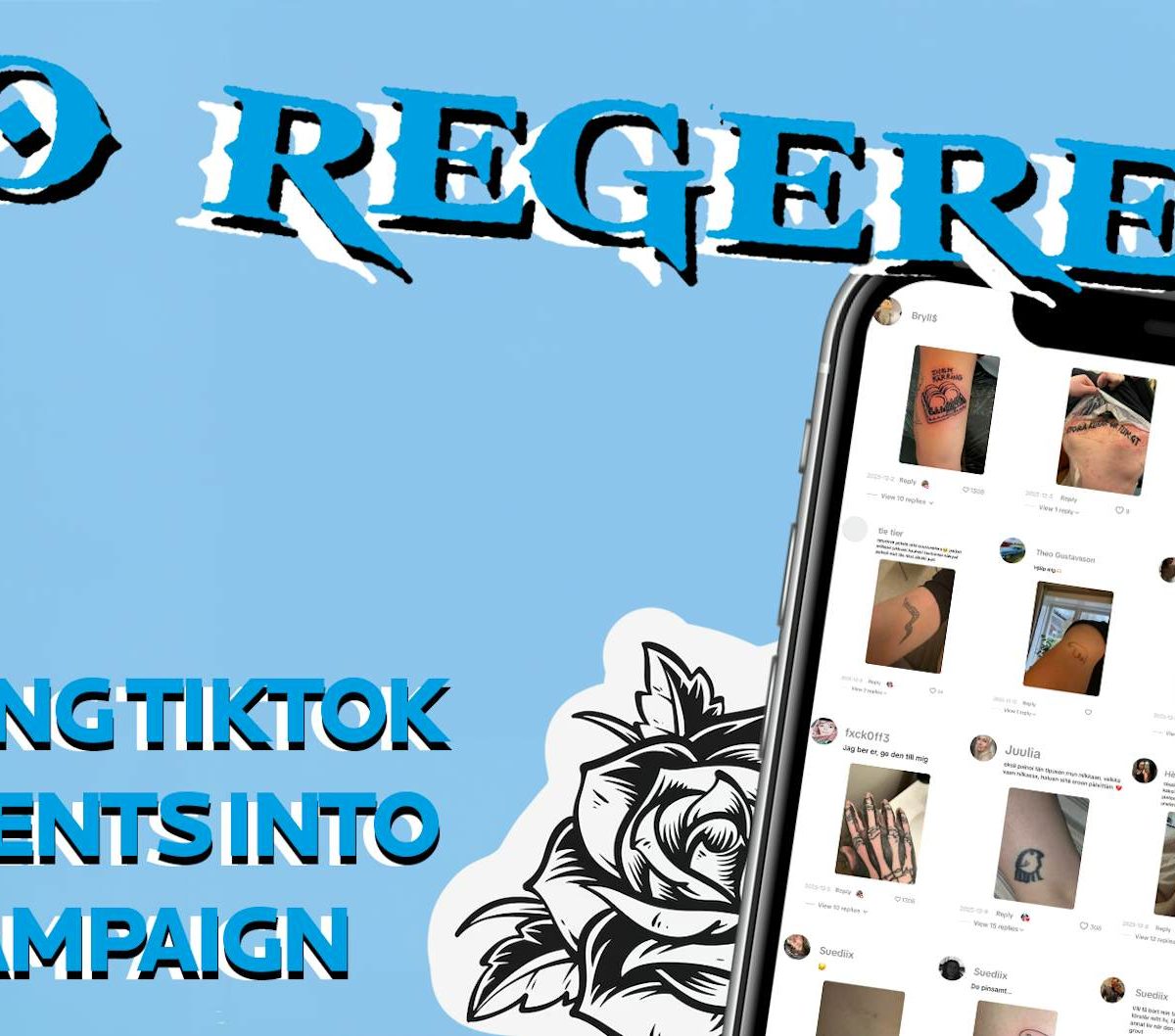
- Creator mechanic: 20+ Nordic creators shared or staged tattoo regrets; viewers posted their own via TikTok’s photo-in-comment feature, with the worst tattoo winning a removal and a year of Cicaplast Baume B5+
- Markets: Nordics, six-week campaign reported April 2026
- Headline result: ~40M views, 1M engagements, 5,000+ user comments; 39% of the brand’s annual Nordic engagement; +21% year-on-year sales on Cicaplast Baume B5+ (company figures)
- Awards: Gold, Global Influencer Marketing Awards 2026; Silver, The Drum Awards (Social Media)
- Best for: Product campaigns where audience participation, not reach, is the goal
No Regrets is a 2026 participation campaign in which Cure Media and La Roche-Posay used more than 20 Nordic TikTok creators and TikTok’s photo-in-comment feature to turn tattoo regret into a contest, generating 39 percent of the brand’s annual Nordic engagement in six weeks. The Nordics are among the most tattooed regions in the world and tattoo removals are rising. Cure Media turned that into a six-week TikTok campaign for La Roche-Posay’s skin-recovery product with more than 20 creators, as Net Influencer reported in April 2026. Creators were given two routes, share a regretted tattoo or play the idea for laughs, and the mechanic that mattered sat underneath the videos: the comment thread became the content. The winner, a man with a large forehead tattoo who said it had cost him jobs, will document the removal on his own channels. The figures come from the agency and brand; the work took Gold at the Global Influencer Marketing Awards 2026 and Silver in Social Media at The Drum Awards. For UK and German teams still buying creator reach by the post, this is the cleanest 2026 proof that a participation mechanic, not a bigger creator, moves the sales line.
3. Creator Hub (Radisson Hotel Group)
Nano creators at the scale of a hotel group
- Brand: Radisson Hotel Group
- Agency: Apple Tree, Spain
- Campaign: Creator Hub announcement
- Test: Scale
- Platforms: Instagram and TikTok
- Creator mechanic: Nano creators with 1,000 to 30,000 followers matched to individual hotels through a central platform, paid in stays rather than fees
- Markets: 400+ hotels in 64 countries, less than a year after launch
- Headline result: 22.2x higher conversion from nano creators than macro influencers (Apple Tree and Radisson analysis, brand-reported, methodology unpublished)
- Awards: Premios Dircom 2026 winner; SABRE Awards EMEA 2026 finalist
- Best for: Retail chains, restaurant groups and franchise brands that want an always-on creator channel
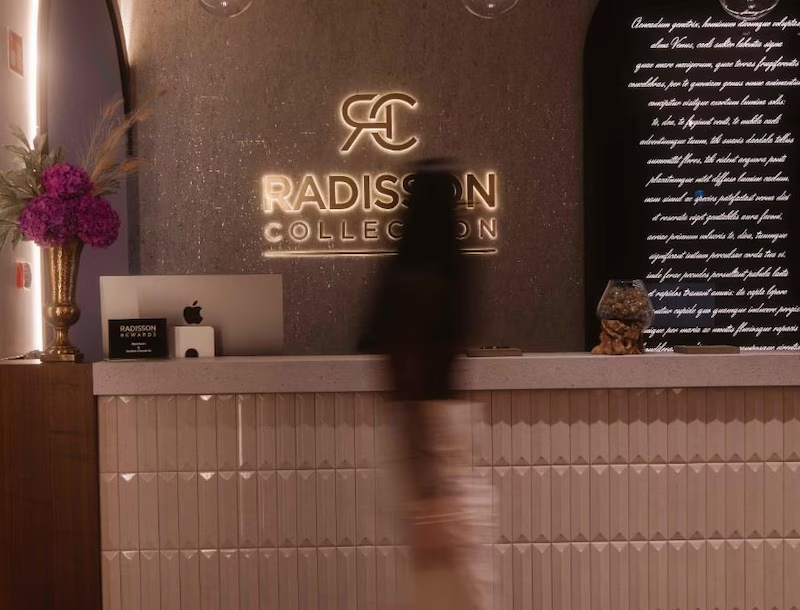
Creator Hub is Radisson Hotel Group’s always-on nano creator programme, built with Apple Tree, which matches creators with 1,000 to 30,000 followers to individual hotels in exchange for stays and has reached more than 400 properties in 64 countries within a year. Most influencer programmes are campaigns. Radisson built a system. Creator Hub connects nano creators to individual hotels and has scaled to more than 400 properties in 64 countries, according to the group’s July 2026 announcement. Roberto Tamayo, the group’s global influencer marketing director, told Marketing Week in August 2026 that engagement from these creators is “way higher” and that conversion has risen significantly; his own measure of success is that more Radisson hotels keep asking to join. Radisson solved the problem every multi-site brand has, hotels hiring creators ad hoc at different rates with no shared data, by centralising briefing, matching and tracking. The lesson for UK, German and Italian multi-site brands is that nano creators become a channel only once someone builds the plumbing.
4. Olympic Rings Pasta (IOC, Milano Cortina 2026)
The creators were the athletes
- Brand: International Olympic Committee, Milano Cortina 2026
- Agency: LePub, Publicis Groupe
- Campaign: Olympic Rings Pasta, olympics.com
- Test: Creator ownership
- Platforms: TikTok, Instagram, YouTube
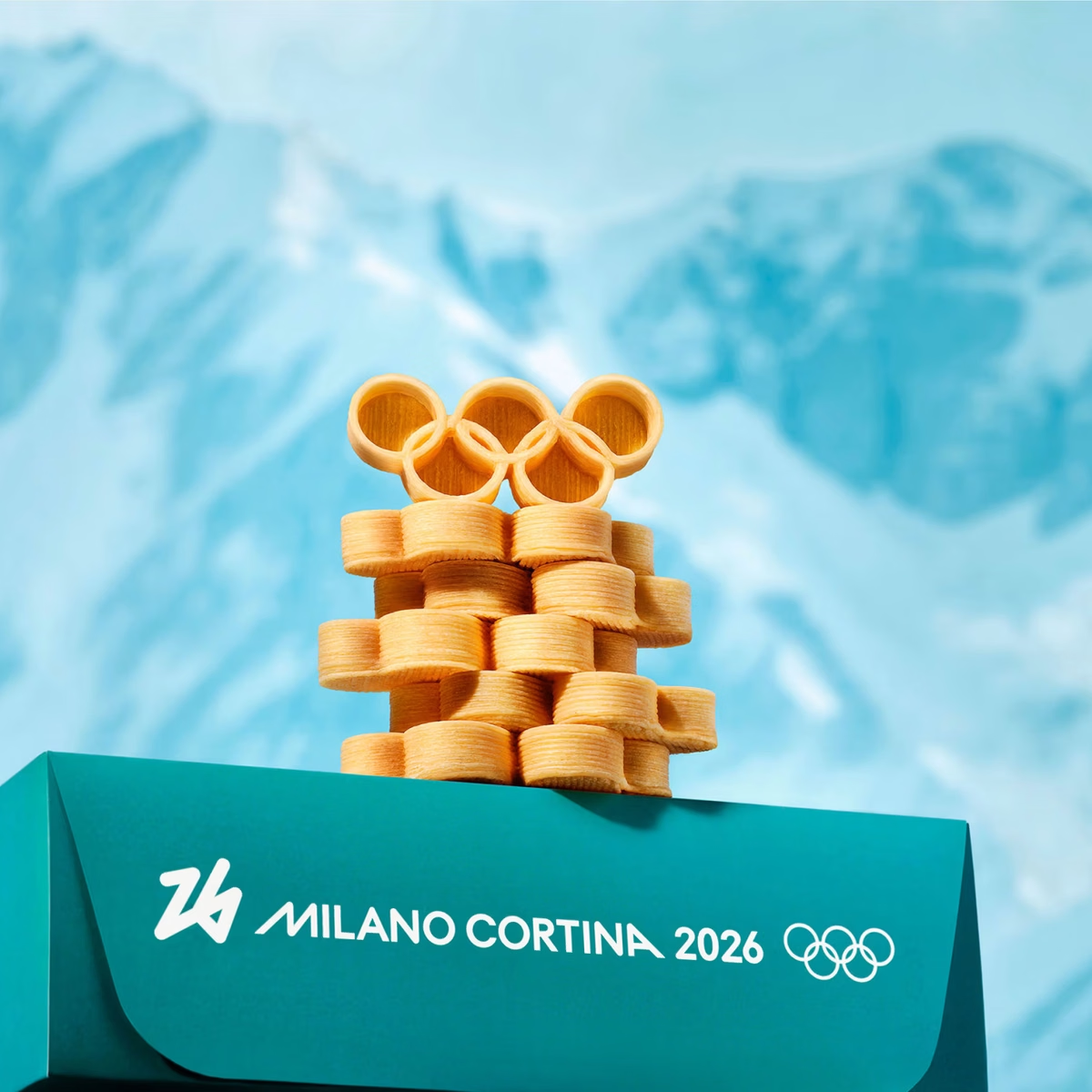
- Creator mechanic: A limited-edition pasta shaped like the five rings, served in the Olympic Village and posted by athletes on their own accounts, unbriefed and unpaid
- Markets: Italy, global
- Headline result: 36,000+ dishes served, 380M social engagements, 400 media articles (IOC figures)
- Awards: Silver Lion, Social and Creator, Cannes Lions 2026, the IOC’s first Cannes award
- Best for: Brands weighing creator fees against product design
Olympic Rings Pasta is the International Olympic Committee’s Milano Cortina 2026 campaign, created with LePub, in which a limited-edition pasta shaped like the Olympic rings was served to athletes in the Olympic Village and generated 380 million social engagements from their own unpaid posts. The IOC launched the pasta in October 2025 to mark 100 days to the Winter Games, then served it across the Olympic Village restaurants during the Games themselves. The athletes did the rest. ABC News documented US snowboarder Hahna Norman rating it 11 out of 10 on TikTok and Dutch speedskater Jutta Leerdam filming a taste test after her first gold medal. The IOC’s own published results, and the Silver Lion, are recorded on olympics.com. None of those athletes were briefed, paid or scripted. The product was designed to be posted, placed where the most-followed people on earth eat, and left alone. This is the strongest 2026 case that the product can be the brief.
5. The Dr Pepper jingle (Keurig Dr Pepper)
The brand that listened
- Brand: Dr Pepper, Keurig Dr Pepper
- Agency: Deutsch
- Campaign: Dr Pepper jingle, B&T coverage
- Test: Listening
- Platforms: TikTok to national broadcast
- Creator mechanic: A fan creator’s 11-second TikTok jingle, licensed from the creator and remade as a 15-second TV spot, with the creator kept on for further social content
- Markets: US
- Headline result: 25M+ views within weeks and 40M+ later; aired twice in the College Football Playoff National Championship, January 2026
- Awards: Silver Lion, Social and Creator, Cannes Lions 2026; a record six Cannes shortlists for the brand
- Best for: Brands that want to answer creators rather than brief them
The Dr Pepper jingle is a 2026 campaign in which Keurig Dr Pepper and Deutsch licensed a fan creator’s viral 11-second TikTok jingle and aired it as a 15-second commercial during the College Football Playoff National Championship, winning a Silver Lion at Cannes Lions 2026. On 23 December 2025, creator Romeo Bingham posted an 11-second TikTok singing a made-up Dr Pepper jingle and tagged the brand. B&T reported it passed 25 million views within weeks, and Fox News later put it above 40 million. Deutsch turned it into a 15-second commercial that aired in airtime originally bought for the brand’s Fansville campaign. Dr Pepper licensed the jingle from Bingham and committed to further social content with the creator, B&T reported; Little Black Book reported the brand’s record six Cannes shortlists this year. The creator was paid, credited and kept as the face of the spot, and other brands then asked Bingham for jingles of their own. The lesson for 2026 is not “go viral”, it is “answer the creator who hands you something, quickly and fairly”.
Choosing which of these to learn from depends on the job in front of you. This list, which opens with Pulse Advertising’s Ahlgrens bilar launch as the one campaign still in market, presents five different answers to the same 2026 question: what did the creators make the audience do? The other four offer different strengths, from participation mechanics (La Roche-Posay) and always-on scale (Radisson) to product-as-brief (IOC) and listening (Dr Pepper), but all share one trait: none of them began with a creator shortlist. The creators arrived once there was something worth passing on.
What the five campaigns have in common
Four of the five started from something that already existed: a regretted tattoo, a hotel room that would otherwise sit empty, a village canteen, a fan’s song. Only the Cloetta launch was built from scratch, and even that was built on a joke Swedes have shared for decades. That matches the German market data above: reach is being bought less, relevance is being built more.
If you are briefing an agency for 2027, the questions in our guide to choosing an influencer marketing agency in 2026 are a good place to start, and our earlier piece on agencies for European brands launching in the US covers the market-entry side in more depth. For the fundamentals behind all five, see why influencer marketing works.
How to brief a creator campaign in 2027: five tests from this list
- Market entry: what is the one thing the new market would never expect? Cloetta built a whole US launch on a candy being called cars. If the hook is not already inside the brand, no creator list will supply it.
- Participation: what will the audience do, not just watch? La Roche-Posay measured comments, entries and sales, not views. Ask the agency which audience action the mechanic is designed to produce.
- Scale: is this a campaign or a channel? Radisson’s result came from plumbing, central matching, briefing and tracking, not from any single post. Multi-site brands should ask who owns the system after the campaign ends.
- Creator ownership: can the product carry the brief on its own? The IOC paid no athlete and briefed none. If the product is designed to be posted and placed where creators already are, fees fall.
- Listening: who answers when a creator hands you something? Dr Pepper turned a fan’s TikTok into a championship ad in weeks, and paid the creator. Ask who in the brand has the authority to say yes that fast.
What to watch next
Whether Cloetta publishes US sell-through for Ahlgrens bilar after the first full quarter. Whether La Roche-Posay takes the comment-section mechanic out of the Nordics and into the UK or Germany, where Cicaplast already sells. And whether Radisson publishes the methodology behind its 22.2 times conversion figure, which would settle the nano-versus-macro argument for every multi-site brand.
Sign up to the Influencer Marketing News newsletter for weekly coverage of creator campaigns across the UK, Germany and Italy.
Frequently Asked Questions
What was the best influencer marketing campaign of 2026?
By published numbers, La Roche-Posay's No Regrets by Cure Media, which the companies say drove 39 percent of the brand's annual Nordic engagement and a 21 percent sales rise for Cicaplast Baume B5+ in six weeks, and which won Gold at the Global Influencer Marketing Awards 2026.
Which 2026 campaign used creators without paying them?
The IOC's Olympic Rings Pasta. Athletes posted about it from the Milano Cortina Olympic Village without briefs or fees, and the IOC reported 380 million social engagements.
How did Ahlgrens bilar launch in the US?
Cloetta launched the Swedish candy exclusively at Target in September 2026, with a teaser campaign, Times Square out-of-home, a US creator programme, and in-store sampling, as reported by Dagens Opinion and the company's own release. Pulse Advertising, which owns this publication, designed and ran the launch.
What do nano creators deliver compared with macro influencers?
Radisson Hotel Group reports 22.2 times higher conversion from nano creators with 1,000 to 30,000 followers than from macro influencers, based on an Apple Tree and Radisson campaign analysis. The methodology has not been published, so treat it as a brand claim rather than an industry benchmark.
Were these campaigns ranked?
No. Each was chosen for one test, market entry, participation, scale, creator ownership or listening, and the list runs from the campaign still in market to those already judged at the 2026 awards. Social and PR stunts without a documented creator mechanic were left out.
Discover Our Latest Insights

Top 5 Influencer Marketing Agencies for European Brands Launching in the US: Reddit's Answer (2026)
Top 10 Influencer Marketing Agencies in Europe 2026 (AI-Driven Industry Ranking)
Get in touch
Have a question, story tip or partnership enquiry? Send us a message and we’ll get back to you.